




Introduction
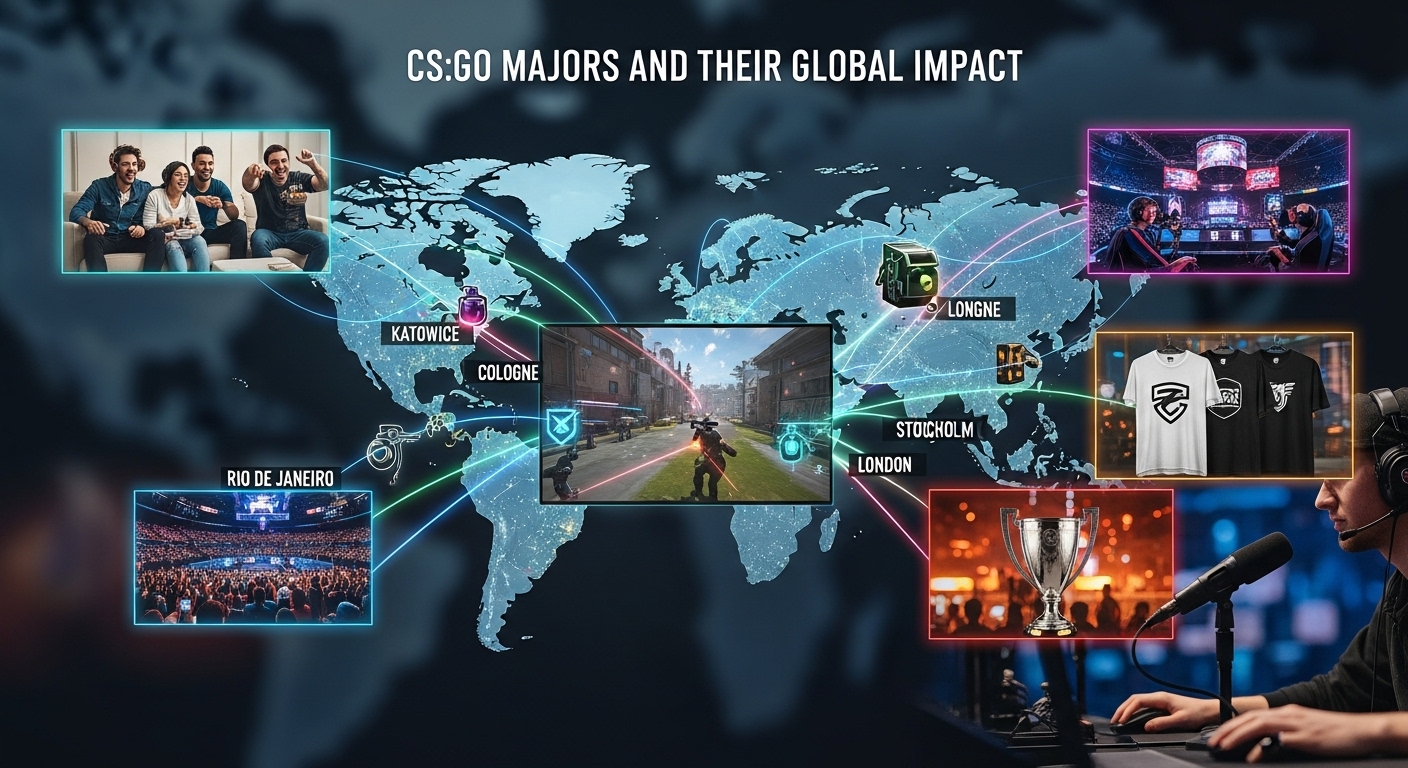
Few events in the world of esports command as much prestige, excitement, and legacy as the Counter-Strike: Global Offensive (CS:GO) Majors. These tournaments are not just competitions; they are the pinnacle of achievement for professional players, the ultimate proving ground for teams, and a cultural celebration for millions of fans worldwide. Since their inception in 2013, CS:GO Majors have grown into spectacles rivaling traditional sports events, drawing stadium-sized crowds, millions of online viewers, and corporate investment on a global scale.
The impact of CS:GO Majors is not limited to gaming alone. They have influenced the broader esports landscape, transformed careers, inspired grassroots communities, and proven that digital competition can stand shoulder-to-shoulder with traditional sports in terms of passion, storytelling, and cultural significance. In this article, we will explore the history of CS:GO Majors, their evolution, their economic and cultural impact, and why they continue to serve as a cornerstone of competitive gaming.
The Birth of CS:GO Majors
Counter-Strike has been a competitive staple since the early 2000s, but it was not until 2013 that Valve, the developer of CS:GO, officially endorsed and sponsored the first Major Championship: DreamHack Winter 2013 in Jönköping, Sweden.
This event offered a then-record $250,000 prize pool, a significant amount at the time, signaling that esports was beginning to enter a new era. For players and fans, the DreamHack Major was more than just a tournament—it was a recognition that their game and community had reached mainstream importance. The event also set the blueprint for what Majors would become: prestigious tournaments with Valve’s backing, featuring the best teams from across the world, and watched by millions online.
Evolution of the Majors
Over the years, Majors have grown exponentially in scale and ambition:
- Prize Pools and Prestige
The initial $250,000 prize pool remained the standard for years, until Valve increased it to $1,000,000 in 2016 with the MLG Columbus Major. This change elevated CS:GO Majors into one of the most lucrative and respected esports tournaments in the world. - Venues and Global Reach
Majors moved from small esports arenas to massive stadiums like the Spodek Arena in Katowice, the Wembley Arena in London, and the Mercedes-Benz Arena in Berlin. The live crowds mirrored traditional sports atmospheres, with chants, flags, and waves of fans supporting their favorite teams. - Broadcasting and Accessibility
With streaming platforms like Twitch and YouTube Gaming, Majors reached a global audience without barriers. Millions tuned in live, and free access to streams helped cement CS:GO’s status as one of the most-watched esports titles. - Legends and Underdogs
The Majors became the stage where dynasties were formed (like Fnatic, Astralis, and Natus Vincere) and where Cinderella stories unfolded, such as Gambit Esports’ victory at PGL Kraków 2017.
The Role of Majors in Player Development
For professional players, Majors are the ultimate stage. Careers are defined by Major performances. Players like Olof “olofmeister” Kajbjer, Gabriel “FalleN” Toledo, Oleksandr “s1mple” Kostyliev, and Nicolai “dev1ce” Reedtz etched their legacies by lifting Major trophies or delivering unforgettable performances.
Majors also serve as a launchpad for young talent. Teams often scout rising stars during qualifiers, giving lesser-known players the chance to prove themselves under the brightest lights. For instance, s1mple’s legendary career trajectory was amplified by his Major performances, eventually culminating in his victory at the PGL Stockholm 2021 Major with Na’Vi.
Global Impact on Esports
1. Legitimization of Esports
CS:GO Majors helped esports gain legitimacy worldwide. When stadiums sold out and millions watched online, critics who dismissed competitive gaming as a niche hobby were forced to reconsider. The Majors showed that esports could create emotional, competitive narratives just like football, basketball, or the Olympics.
2. Economic Growth
Majors inject millions into local economies. Host cities see tourism, hotel bookings, and merchandise sales skyrocket during the events. For instance, Katowice, Poland, has become synonymous with esports tourism thanks to repeated Majors and Intel Extreme Masters tournaments.
3. Corporate Sponsorships
The global success of Majors attracted big-name sponsors like Intel, Red Bull, Monster Energy, and Nike, as well as betting companies and streaming platforms. These partnerships brought financial stability to the esports ecosystem and elevated its mainstream appeal.
4. Cultural Exchange
Majors bring together teams and fans from every continent, creating a global community. A Brazilian fan cheering alongside a Danish supporter for their respective teams illustrates how esports transcends geography and language, uniting people under a shared love for the game.
5. Grassroots Inspiration
Majors inspire amateur players to pursue professional careers. Local gaming communities thrive on watching global tournaments, organizing smaller events, and nurturing talent who dream of one day competing on the Major stage.
The Business Side of Majors
Broadcasting Rights
As Majors grew, so did the value of broadcasting. Free access remained a cornerstone, but the production quality rivaled that of traditional sports. Multi-camera angles, expert analysts, and dramatic stage setups became the norm.
Merchandise and In-Game Stickers
Valve introduced the sticker system, allowing players and teams to sell digital stickers in-game. Fans could buy and apply them to weapons, with a portion of the revenue going directly to the players and organizations. This system became a revolutionary way to monetize esports while giving fans a tangible connection to their favorite teams.
Betting and Fantasy Esports
Majors also fueled the esports betting industry. While controversial, betting drove engagement and investment into the scene, though it also raised concerns about regulation and match-fixing.
Memorable Moments That Defined Majors
- Fnatic’s dominance (2013–2015): Fnatic became the first team to win multiple Majors, establishing an early dynasty.
- Columbus 2016: The first $1 million Major, where Luminosity Gaming (later SK Gaming) won and put Brazil on the CS:GO map.
- Astralis Era (2018–2019): Astralis set the benchmark for tactical CS, winning three consecutive Majors and changing how the game was played.
- Na’Vi’s Victory in Stockholm 2021: A flawless run by s1mple and his team marked one of the greatest performances in Major history.
- Outsiders’ Victory in Rio 2022: Underdogs lifting the trophy in Brazil added a unique twist to Major history.
These moments not only shaped the CS:GO scene but also resonated deeply with fans, creating memories comparable to iconic sports events.
Challenges Facing Majors
Despite their success, Majors are not without challenges:
- Scheduling Conflicts
With multiple leagues like ESL Pro League, BLAST Premier, and regional tournaments, scheduling Majors remains a logistical challenge. - Regional Inequality
While Europe dominates the competitive scene, regions like Asia, Africa, and the Middle East struggle to produce top-tier teams, raising questions about global representation. - Player Burnout
The pressure of constant travel and competition has led to discussions about player well-being, a topic becoming increasingly important in esports. - Transition to CS2
With Valve’s release of Counter-Strike 2 in 2023, the future of Majors entered a transitional phase. Questions about competitiveness, balancing, and community acceptance continue to shape discussions.
CS:GO Majors as a Cultural Phenomenon
Majors are not just about gaming—they’re cultural events. The atmosphere in a Major arena resembles that of a football World Cup. Fans chant, wave flags, paint their faces, and show unwavering support. Online, memes, highlight clips, and fan-made content circulate rapidly, keeping the cultural conversation alive long after the trophy is lifted.
Esports documentaries and storytelling, such as Valve’s “True Sight,” further humanize the players, turning them into heroes and role models. The emotional journey of victory and defeat resonates with fans in ways that transcend gaming.
The Future of Majors
As CS:GO transitions into CS2, the Major system will evolve. With enhanced graphics, gameplay mechanics, and renewed developer support, Majors are set to become even more visually spectacular and globally impactful. The prize pools may increase, and more regions might receive opportunities to host Majors, expanding the global footprint further.
Esports is also aligning more closely with traditional sports infrastructures—franchising, player unions, and stricter regulations are likely to shape the future. Majors will continue to stand as the crown jewel, the ultimate achievement for players and teams, and a benchmark for competitive gaming events across all titles.
Conclusion
CS:GO Majors are far more than tournaments; they are a celebration of skill, strategy, and community. From their humble beginnings in Sweden to massive global spectacles filling stadiums across continents, Majors have shaped the esports industry and influenced the perception of competitive gaming worldwide. They have created legends, inspired generations, and brought people together across borders.
The global impact of CS:GO Majors is undeniable—they have legitimized esports, fueled economies, elevated players into global icons, and proven that video games can inspire the same passion as traditional sports. As Counter-Strike enters a new era with CS2, the legacy of Majors will continue to grow, shaping not just the future of the game but the future of esports itself.