




Introduction
Gaming is no longer just a pastime; it’s a universe of creativity, technology, emotion, and connection. What began as a few blocks bouncing on a screen has evolved into immersive worlds that blur the line between reality and imagination. Today, gaming is a global culture that transcends age, language, and borders. Whether someone plays on a console, PC, or phone, they are part of a vast digital community that shapes entertainment, art, and even the economy.
This article explores the evolution of gaming, the cultural impact it has made, the technology driving it forward, and how it continues to define the way we play, connect, and think.
The Early Days: When Pixels Ruled the Screen
The roots of gaming go back to a time when computers filled entire rooms and television screens flickered in black and white. The earliest games, such as “Pong” and “Space Invaders,” were simple yet revolutionary. They introduced the idea that humans could interact with machines for entertainment. Despite their primitive graphics, these games sparked something extraordinary — curiosity and competition.
Arcades became social hubs in the 1970s and 1980s. People gathered around flashing machines, their pockets full of coins, eager to beat the high score. The sounds of electronic beeps and synthesized music created a unique atmosphere that defined a generation. Games like “Pac-Man,” “Donkey Kong,” and “Galaga” became cultural icons, inspiring merchandise, cartoons, and even movies.
At home, consoles like the Atari 2600 brought gaming into living rooms. Players no longer needed to visit arcades; they could now enjoy the thrill from their couches. Despite their limited capabilities, these early systems laid the foundation for the interactive experiences we take for granted today.
The Golden Age of Consoles
As technology advanced through the late 1980s and 1990s, the competition among gaming companies intensified. Nintendo, Sega, and later Sony transformed gaming into a mainstream form of entertainment. The introduction of characters such as Mario, Sonic, and Link gave gaming its first set of household heroes. These mascots became more than pixels; they became legends.
The release of the Nintendo Entertainment System (NES) revived the gaming industry after a crash in the early 1980s. With well-designed titles, careful quality control, and compelling storytelling, Nintendo captured the imagination of millions. Then came the Super Nintendo and Sega Genesis, pushing boundaries with colorful worlds and memorable soundtracks.
By the mid-1990s, 3D graphics entered the scene, changing everything. Games like “Super Mario 64” and “The Legend of Zelda: Ocarina of Time” showed players that virtual worlds could be explored freely in three dimensions. Sony’s PlayStation brought cinematic storytelling and adult themes to the forefront, appealing to older audiences as well. The era of cartridges began to fade as discs offered more storage and better graphics.
The Rise of PC Gaming and Online Play
While consoles dominated living rooms, personal computers were creating their own revolution. PC gaming allowed for more complexity and customization. Genres like strategy, simulation, and role-playing found a natural home on computers. Titles such as “Warcraft,” “SimCity,” and “Diablo” defined what depth and replayability could look like in gaming.
Then came the internet, and with it, a new kind of connection. Online multiplayer gaming transformed how people interacted. Suddenly, players could compete or cooperate with others across the world. “Counter-Strike,” “World of Warcraft,” and “Runescape” built online communities that never slept. Gamers were no longer just players; they became citizens of digital realms.
The rise of mods and user-generated content also gave players more creative freedom. Games like “Half-Life” inspired entire new genres, leading to creations like “Team Fortress” and “Dota.” The idea that a fan could modify or expand a game became a cornerstone of gaming culture.
The Era of Realism and Open Worlds
As hardware improved in the 2000s, so did the ambition of game developers. Graphics became more realistic, sound design more immersive, and storytelling more cinematic. Studios began to focus on emotional depth and moral choice. Games like “Grand Theft Auto III,” “Mass Effect,” and “The Elder Scrolls IV: Oblivion” introduced open worlds that felt alive.
In these vast digital landscapes, players could explore, make decisions, and create their own experiences. The boundaries between linear storytelling and player freedom blurred. Developers no longer dictated every step; they offered worlds where players could forge their own path.
The popularity of sandbox games exploded. Titles like “Minecraft” empowered creativity in a way no other game had before. Players could build entire worlds block by block, sharing them with others and blurring the line between playing and creating.
The Rise of Mobile Gaming
With the arrival of smartphones, gaming became truly universal. Suddenly, everyone was a gamer — not just those with consoles or PCs. Games like “Angry Birds,” “Candy Crush,” and “Clash of Clans” reached audiences of all ages. They were simple, accessible, and addictive.
Mobile gaming opened doors for independent developers and smaller studios. A single creative idea could become a global phenomenon overnight. This democratization of gaming changed the industry forever, showing that success wasn’t limited to big-budget productions.
Moreover, mobile games introduced new business models. The concept of free-to-play games supported by in-app purchases reshaped how companies made money. While controversial, it also allowed more people to experience gaming without upfront costs.
Esports: The Competitive Edge
One of the most transformative developments in gaming has been the rise of esports. What began as friendly competition in living rooms has turned into a global industry worth billions. Professional players, sponsored teams, and massive tournaments fill arenas with cheering fans. Games like “League of Legends,” “Dota 2,” and “Counter-Strike: Global Offensive” have become the digital equivalent of major sports leagues.
Streaming platforms allowed fans to watch live matches, follow their favorite players, and engage in real-time chat. This direct connection between player and audience created a new form of entertainment. The charisma of professional gamers turned them into celebrities, influencing millions worldwide.
Esports also inspired educational programs and career paths in game design, commentary, and event management. What was once seen as a hobby became a legitimate profession.
The Social Side of Gaming
Gaming is no longer a solitary activity. Online multiplayer modes, social media integration, and live voice chat have turned gaming into a powerful social experience. Whether cooperating with friends in “Fortnite,” competing in “Call of Duty,” or exploring worlds together in “Genshin Impact,” players form deep bonds across continents.
These digital friendships often transcend the games themselves. Entire online communities form around shared interests, strategies, and fan art. For many, gaming has become a space for self-expression, belonging, and creativity.
Even during times of isolation, such as the global pandemic, gaming provided comfort and connection. Virtual gatherings and online parties replaced physical ones. Games became not just entertainment but emotional lifelines.
Storytelling and Emotional Impact
Today, games are as much about narrative as they are about gameplay. Developers have learned to tell stories that rival those of movies and novels. Titles like “The Last of Us,” “Red Dead Redemption 2,” and “Life Is Strange” prove that games can move players to tears.
Through interactivity, gaming achieves something no other medium can: it makes the player part of the story. Every decision, every failure, and every triumph feels personal. This emotional involvement deepens empathy and immersion, making games powerful storytelling tools.
Even indie games have mastered this art. Simple yet profound experiences like “Undertale” and “Journey” show that storytelling does not require massive budgets. What matters is connection — the ability to make players feel something real.
The Role of Technology: Virtual Reality and Beyond
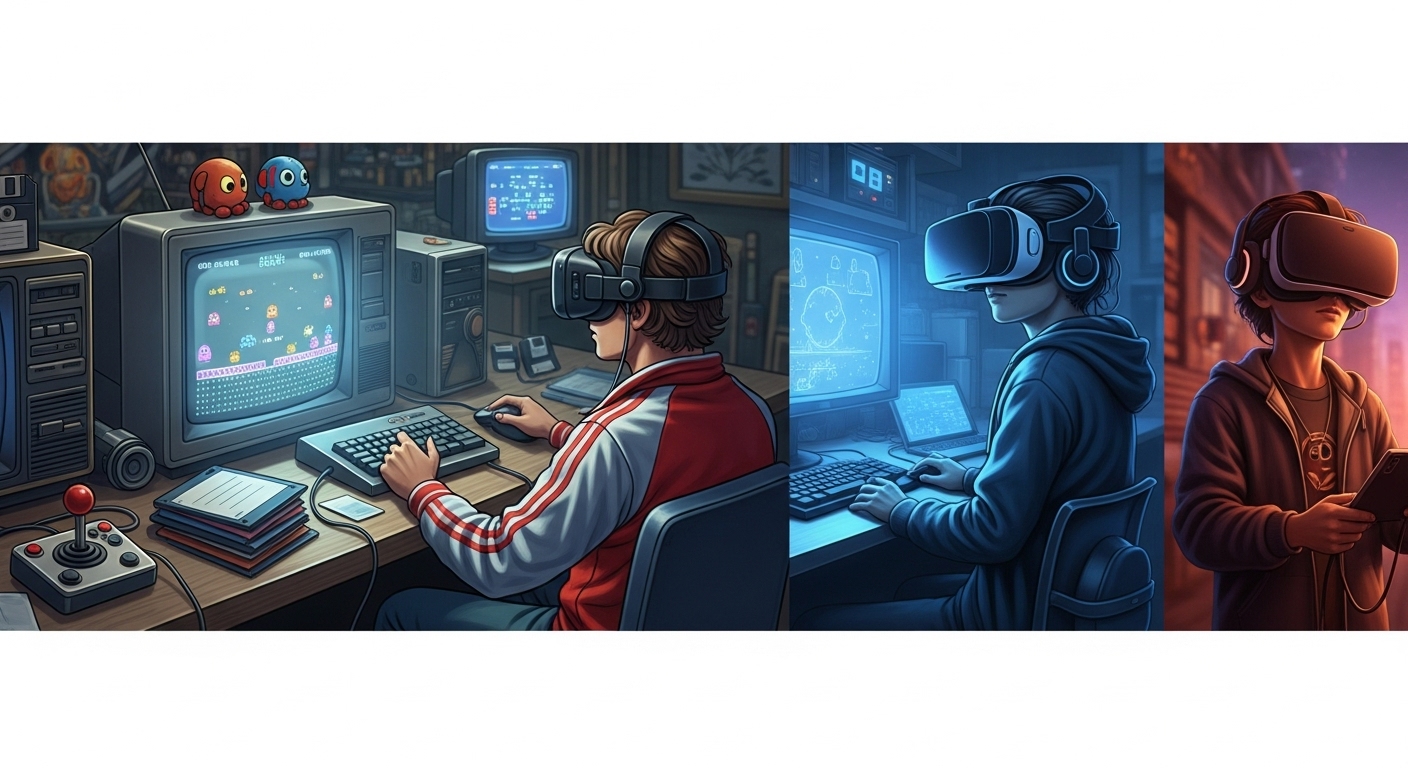
As technology races forward, so does gaming innovation. Virtual Reality (VR) and Augmented Reality (AR) have redefined immersion. With headsets like Oculus Quest and PlayStation VR, players can step directly into digital worlds, moving and interacting as if they were physically there.
AR games like “Pokémon Go” brought gaming into the real world, blending physical spaces with digital experiences. These innovations represent only the beginning. The future promises even more integration of AI, haptic feedback, and cloud computing.
Cloud gaming, in particular, is transforming access. Services that stream games directly to any device remove hardware barriers. A player no longer needs an expensive console or PC to enjoy top-tier experiences. The focus shifts from ownership to accessibility.
Gaming as Art and Expression
The debate about whether games are art has long been settled. Gaming combines visual design, music, storytelling, and interactivity in ways no other art form can. From the breathtaking worlds of “Horizon Zero Dawn” to the hand-painted charm of “Ori and the Blind Forest,” games showcase creativity at its highest level.
Soundtracks, too, play a crucial role. Music in games guides emotion and builds atmosphere. Iconic themes from franchises like “Final Fantasy” or “Halo” have become part of popular culture, performed by orchestras and celebrated by fans worldwide.
Artistic expression extends beyond professional developers. Player-created content, from mods to fan art and machinima, demonstrates how gaming communities participate in the creative process. The boundary between artist and audience continues to fade.
The Psychological and Educational Side of Gaming
Contrary to old stereotypes, gaming isn’t mindless entertainment. Research shows that gaming can enhance cognitive skills, problem-solving, and teamwork. Strategy games improve planning abilities, while puzzle games boost mental agility.
Educational games have found a strong foothold in classrooms. Interactive learning helps students understand complex subjects in engaging ways. Historical games like “Assassin’s Creed” even inspire interest in real-world events and cultures.
Of course, balance is key. Excessive gaming can lead to problems like addiction or social withdrawal. However, when approached mindfully, gaming can foster focus, creativity, and collaboration. Parents, educators, and players themselves are learning to embrace the positive aspects while managing the risks.
The Global Gaming Community
The global nature of gaming has created a cultural melting pot. Players from every corner of the world share experiences, languages, and traditions through games. Events like international tournaments and global releases unite fans in anticipation and celebration.
Localization has allowed developers to reach broader audiences, adapting stories and dialogue to different cultures. Meanwhile, online forums and fan spaces have become centers of discussion, creativity, and collaboration.
The gaming industry itself is now larger than film and music combined, employing millions and driving technological progress. Its influence can be seen in fashion, film, and even education. Gaming has become not just a subculture but a defining force of modern life.
The Indie Revolution
Independent developers have reshaped the landscape of gaming by proving that innovation doesn’t depend on massive budgets. Indie games focus on creativity, experimentation, and emotional resonance. Titles like “Celeste,” “Hades,” and “Stardew Valley” showcase how smaller studios can produce masterpieces.
The rise of digital distribution platforms has given indie creators a direct path to audiences. This freedom allows for more diverse stories, representation, and artistic risk-taking. Players benefit from this variety, discovering unique experiences that break traditional molds.
Indie games remind the world that gaming is not just about competition or graphics. It’s about imagination, expression, and heart.
The Future of Gaming
Looking ahead, the possibilities are limitless. Artificial intelligence will make characters smarter and more responsive. Cloud technology will make games universally accessible. Virtual worlds will become more immersive, and storytelling will evolve in ways we can barely imagine.
The boundary between gaming and reality will continue to blur. Virtual economies, digital ownership, and even the concept of the metaverse suggest that gaming may become the backbone of future social and economic systems.
Yet, amid all the innovation, one thing will remain constant — the human desire to play. From ancient board games to digital adventures, play has always been a part of who we are. Gaming simply gives it new form and meaning.
Conclusion
Gaming has come a long way from its humble beginnings. It has grown from simple pixels into living worlds, from casual fun into global culture, and from solitary hobbies into social experiences. It connects people, inspires creativity, and pushes technology to new heights.
The world of gaming is not just about entertainment; it’s about exploration, emotion, and expression. It’s an art form that combines imagination with interaction, offering players the ability to not only witness stories but to live them.
As technology continues to evolve, so too will the ways we play. Whether through virtual reality, cloud platforms, or yet-unimagined innovations, gaming will always reflect the endless creativity of the human spirit. And as long as there are players eager to explore, compete, and dream, the world of gaming will keep growing — pixel by pixel, world by world.